Al-Hadba University · Mosul, Iraq | [email protected]
An Open Archive · from Mosul

Nineveh & Record

A reference to the city, the plain & the Governorate
The reference, complete & open

A scholarly chronicle of Nineveh — for the public, the scientist, the policymaker.

Nineveh Record is an evolving, open-access archive maintained by Al-Hadba University in Mosul. From the cuneiform tablets of ancient Nineveh to the reconstruction of the Old City, it gathers verifiable knowledge across seventeen domains of inquiry — citing sources, welcoming scholarly contribution, and serving readers in both Arabic and English.

Browse the topics — Why this archive?
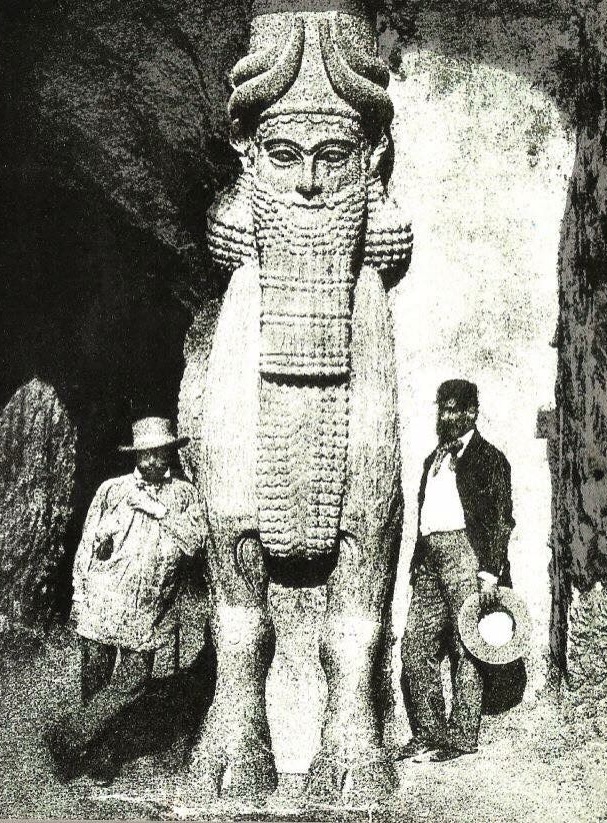
Photograph of a colossal Assyrian Lamassu — a winged bull with a human head — flanked by two excavators.
Lamassu — guardian deity of ancient Nineveh, photographed during early excavations
§ I — The Domains

Seventeen fields of inquiry

№ 01

Geography

Topography of the Tigris valley, sub-regions, plains, ridges & cartography.

№ 02

History

From Nineveh and the Assyrian empire through Atabegs, Ottomans & modernity.

№ 03

Politics

Provincial governance, councils, federal relations and local administration.

№ 04

Geology

Soil profiles, hydrocarbon basins, seismicity & the Mosul Dam foundation.

№ 05

Health

Hospitals, public-health indicators, medical schools and patient services.

№ 06

Infrastructure

Bridges over the Tigris, road network, electricity, water & telecoms.

№ 07

Education

Schools, universities, research output and academic institutions.

№ 08

Culture

Mosuli dialect, cuisine, music, festivals, dress & daily life.

№ 09

Heritage & Reconstruction

Old City, monuments, post-2017 restoration and the UNESCO Revive Mosul effort.

№ 10

Art

Visual arts, calligraphy, the Mosul school of painting & contemporary studios.

№ 11

Sport

Clubs, stadiums, footballers and the city's athletic institutions.

№ 12

Tourism

Visiting Nineveh, the Old City, monasteries of the plain and the Mosul Dam lake.

№ 13

Religions

Islam, Eastern Christianity, Yazidism, Mandaeism & the city's interfaith fabric.

№ 14

Economy

Trade, oil, agriculture, banking, labour markets & reconstruction finance.

№ 15

Weather & Climate

Continental climate, seasonal extremes, dust storms & long-term trends.

№ 16

Human Resources

Demography, displacement & return, workforce, diaspora and skills mapping.

№ 17

Natural Resources

Tigris waters, hydrocarbons, minerals, soils & biodiversity of the plain.

About this archive

This archive is maintained by Al-Hadba University as part of its commitment to Mosul and Nineveh — rebuilding the province's human capital through education, restoring its research and library infrastructure, and offering this open, sourced, multilingual record to the community as a public good.

Al-Hadba University →

17

Domains of inquiry

9

Districts of Nineveh

EN · AR · KU · TR · ES

Multilingual entries

Open

Access & sourced
§ II — The Territory

The districts of Nineveh

  1. iMosulThe provincial capital, on both banks of the Tigrisالمَوْصِل
  2. iiTal AfarWest of Mosul, with its Ottoman-era citadelتَلْعَفَر
  3. iiiSinjarThe Yazidi heartland and Mount Sinjarسِنْجار
  4. ivAl-HamdaniyaIncluding Bakhdida, Bartella & the Christian plainالحَمْدانية
  5. vTilkaifIncluding Bashiqa, Alqosh & Telkeppeتِلْكَيْف
  6. viAl-Ba'ajThe arid south-western reach toward the borderالبَعّاج
  7. viiAl-HatraSite of the UNESCO-listed ancient cityالحَضَر
  8. viiiSheikhanLalish and the Yazidi spiritual centreالشَّيْخان
  9. ixAkreMountainous district on the Kurdistan borderعَقْرة
§ III — The Charter

Why a record, & for whom

i. For the public

An accessible window onto the city

Mosul is older than most cities still inhabited on Earth. The Record is written so that any reader — student, traveller, returning son or daughter of the city — may understand it through plain language, in Arabic and English, without paywalls.

ii. For the scientist

A sourced reference for research

Every entry cites primary or peer-reviewed sources, dates its claims, and exposes its data. The Record aspires to be the first port of call for any scholar — Iraqi or international — beginning a study of Nineveh.

iii. For the policymaker

A common ground of fact

Sound policy depends on shared evidence. The Record gathers indicators on health, infrastructure, demography and economy in one neutral, regularly-updated place, so that decisions about the city rest on what is, not what is supposed.

Contribute to the Record.

Nineveh Record welcomes corrections, sources, photographs, archival documents and full entries from scholars and citizens alike. All accepted contributions are credited and licensed openly under Creative Commons BY-NC-ND 4.0.

Write to the editors