Education in Nineveh.
From a primary school in the Old City to one of the largest universities in the Middle East, from a thirty-year-old private institution that opened the door to non-profit higher education in Mosul to a young technical university awarded a UNESCO Chair: a survey of how Nineveh teaches and is taught, in the eighth year after the longest interruption to that work in the Governorate's modern history.
Few institutions are as exposed to political rupture, and as quietly required to absorb it, as schools and universities. The educational system of Nineveh has been so absorbed for the better part of a decade. Between June 2014 and July 2017, most children in Mosul missed three full years of schooling; some were exposed to a curriculum imposed by the occupying authority that the Iraqi Ministry of Education has since worked to undo. The University of Mosul was forced into exile to alternative campuses; its central library, already once devastated in 2003, was burned again in 2017. Al-Hadba University — the first private non-profit university in Mosul and one of the oldest in Iraq, founded in 1994 — suspended teaching as the city fell, then resumed under far harder conditions. The Northern Technical University, only weeks after its founding in 2014, found one of its halls reduced to rubble.
What follows is a description of the system as it stands in mid-2026, the institutions within it, the long arc of its destruction and rebuilding, and the reform programmes — particularly the Bologna Process — that are intended to prepare it for the next decade.
i. Overview & the legacy of 2014–2017
Iraq's educational system follows a tiered structure broadly common to the Arab Mashriq. Compulsory primary education covers six years (ages 6 to 11); intermediate education covers three years (ages 12 to 14); and preparatory education covers a further three years (ages 15 to 17), divided between an academic preparatory track (with scientific or literary streams in the final years, leading to higher education) and a vocational preparatory track (industrial, commercial, agricultural, or applied arts streams, leading to either employment or to the technical-college pipeline). Higher education comprises a network of public universities under the Ministry of Higher Education and Scientific Research, a smaller but expanding network of private (predominantly non-profit) universities, and the four public technical universities — one of which, the Northern Technical University, has its headquarters in Mosul.
The pre-2014 educational landscape of Nineveh was extensive: many hundreds of public primary, intermediate, and preparatory schools across the nine districts; the University of Mosul as the second-largest higher-education institution in Iraq; Al-Hadba University as the first private university in the city; the technical-institute network that would later be reorganised into the Northern Technical University; and a wide range of vocational and continuing-education providers.
The Daesh occupation and the campaign for the recovery of Mosul devastated this landscape. Estimates compiled by the United Nations during and after the conflict indicate at least 350 schools across Iraq damaged or destroyed in this period, with at least 100 instructors and 60 students killed, maimed, threatened, or abducted, and at least 70 documented attacks on higher-education facilities, students, and workers. Most children in Mosul missed roughly three years of schooling between 2014 and 2017; those who attended were exposed to an imposed curriculum that, after 2017, the Iraqi Ministry of Education and international partners have spent years undoing. The University of Mosul's central library, the largest in Iraq, was destroyed for the second time in fifteen years; the College of Medicine was forced into exile; the Northern Technical University, which had been founded the same month Mosul fell, lost computer laboratories and lecture halls.
ii. Primary & secondary education
The school network of Nineveh, under the Iraqi Ministry of Education and the Nineveh Directorate of Education, provides the bulk of formal teaching to school-age children in the Governorate. Pre-2014 enrolment data suggested figures broadly consistent with national averages: gross primary enrolment close to universal among boys, with a slightly lower but still high rate among girls; intermediate and preparatory enrolment tapering toward the upper years; and a modest gender gap that widened in rural districts. The Daesh occupation closed almost all government schools across the territory it held; girls were largely banned from continuing their formal education for the duration of the occupation, and curricula taught in those schools that the occupying authority did permit to function were imposed by it.
The post-2017 reconstruction of school infrastructure has been one of the largest single projects of the post-conflict period. UNICEF, working with the Nineveh Directorate of Education and other partners, has rehabilitated 256 schools in Mosul alone since the end of 2016, benefiting more than 250,000 students. The rehabilitation of the al-Huda Primary School in west Mosul — the school sits within a few hundred metres of the Old City — was an early visible example: by 2018, students whose previous experience of school had been the partial year before the occupation, or the home schooling some families had managed during it, were attending again.
UNESCO's Revive the Spirit of Mosul initiative, launched in February 2018, has approached the rebuilding of education on three fronts: physical rehabilitation, teacher development, and curriculum reform. The most-discussed of its rehabilitation projects is Al-Ekhlas Primary School in the Old City, a 60-year-old school that was destroyed during the conflict and reopened with European Union funding in February 2024; the building is now an architectural reference for traditional Mosuli school construction. UNESCO's Prevent Violent Extremism through Education (PVE-E) programme, working with the University of Mosul and local civil-society partners, has provided specialised training to 26 trainers, 743 primary-school teachers and managers, and 307 parents, with the aim of building soft skills — conflict resolution, media and information literacy, human-rights education — that can resist re-radicalisation in the next generation. Other projects supported through this programme include the rehabilitation of the Intissar Commercial School for Girls, six new workshops at the Nineveh Agricultural School and the Mosul Vocational Training Centre, and three Career Development Centres.
The structural challenges of the school system, however, run deeper than the buildings. Iraq's teaching workforce is chronically underpaid; classrooms are overcrowded; many returnee children have effectively missed three or four years of schooling and require remedial intervention to catch up; supplies of textbooks and basic stationery have, in many schools, lagged need. The recovery of school infrastructure has been faster than the recovery of educational outcomes, and the gap between them remains the most pressing question for Iraqi educational policy in Nineveh today.
iii. The University of Mosul
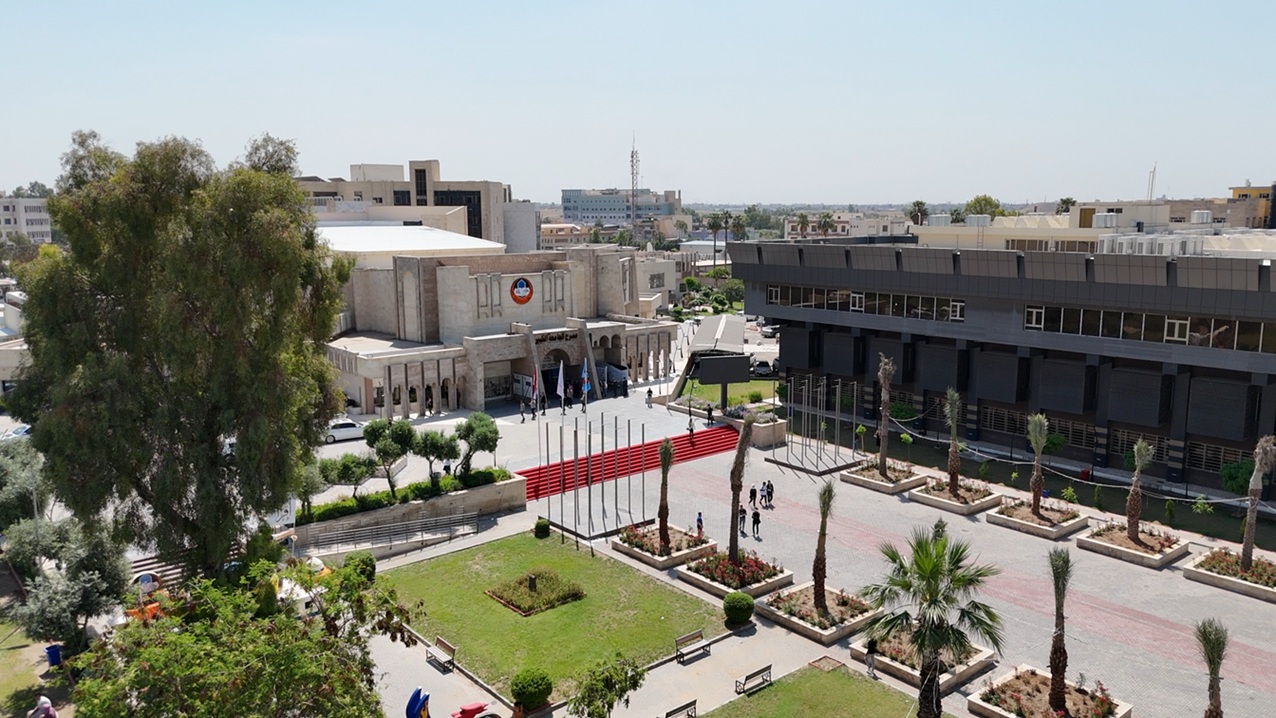
The University of Mosul (Jāmi'at al-Mawṣil; UoM), founded by ministerial decree in April 1967, is the largest higher-education institution in northern Iraq and the second-largest in the country after the University of Baghdad. Its origins predate its formal foundation: the College of Medicine, established on 14 July 1959, was the first college that would become part of the university (its history is treated in detail in our Health entry); it was joined by the College of Engineering and the College of Science in 1963, the College of Agriculture in 1964, and the College of Arts in 1966, before all were unified under the University of Mosul in 1967.
As of 2024, the university comprises 24 colleges, seven specialised research centres, six consulting offices, three teaching hospitals, several museums, a large university theatre, and a central library that has twice in the modern era been destroyed and rebuilt. The colleges include Medicine, Dentistry, Pharmacy, Engineering, Science, Agriculture and Forestry, Veterinary Medicine, Education, Arts, Law, Political Sciences, Computer Science and Mathematics, Fine Arts, Physical Education, Environmental Techniques, and others; postgraduate degrees are offered in more than one hundred specialisations. The principal campuses are clustered in three locations on the right bank in the north of the city, with the College of Medicine at the Medical Compound somewhat separately on the right bank.
The size of the institution is substantial. Recent figures cited by the university's leadership and verified in international rankings give a total academic workforce of approximately 4,281 staff (196 professors, 1,014 assistant professors, 1,261 lecturers, and 1,810 assistant lecturers); enrolment in excess of 30,000 undergraduates and approximately 800 postgraduate students; and a research output of more than 16,000 published papers with over 72,000 citations as recorded across the major bibliometric databases. The university's ranking in the Times Higher Education World University Rankings stands at 1501+ in the most recent round; its rankings in subject-specific tables and in the THE Impact Rankings are higher.
The 2014–2017 dislocation, and particularly the burning of the central library and the destruction of College of Medicine buildings, is treated in our Health entry. The institution's recovery has been steady, with major laboratory and lecture-hall reconstruction supported through bilateral and multilateral programmes including SPARK (with European Union funding), the German KfW Development Bank, the Iraqi Liberated Areas Reconstruction Fund, and others. The university hosts a large number of bilateral cooperation agreements, including a 2023 memorandum of understanding with Tishk International University and a continuing close relationship with the universities of Baghdad and Basra.
iv. Al-Hadba University
Al-Hadba University (Jāmi'at al-Ḥaḍbāʾ; AHU), founded in 1994, holds a double distinction: it was the first private (non-profit) university to be established in Mosul, and is one of the oldest private universities anywhere in Iraq. Its name derives from the celebrated leaning Al-Hadbāʾ minaret of the Great Mosque of Al-Nūrī, the architectural emblem of Mosul (its history is treated in detail in our History and Heritage entries). The founding intent — to demonstrate that high-quality, mission-driven higher education could be sustained on a non-profit basis in Iraq, complementary to but distinct from the public-sector model — was a novel proposition in 1994; it has, in the three decades since, been substantially vindicated.
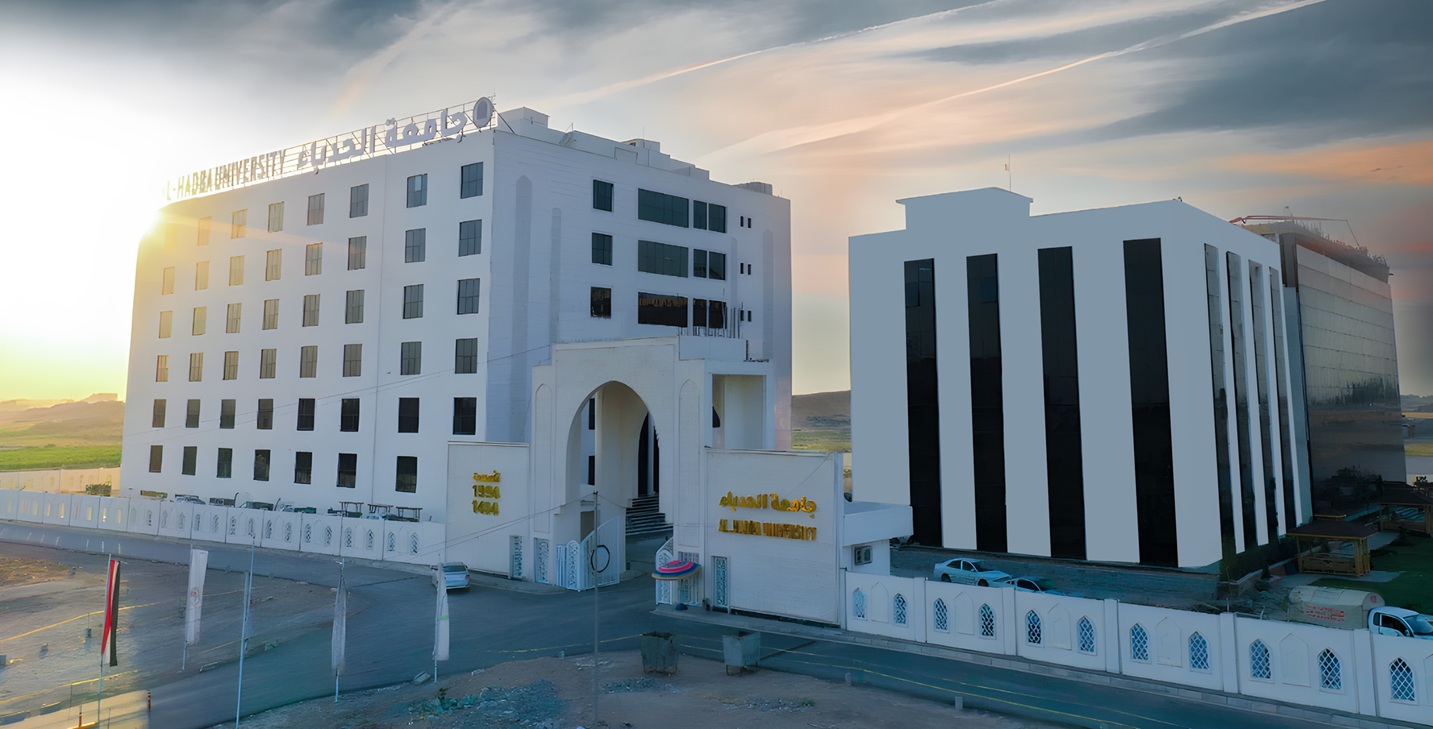
The university's campus stands on the right bank of the Tigris in Mosul. After more than a quarter-century of operation in its original premises, the institution has now substantially expanded into a new building and a new campus area, designed to support both the breadth of its current programmes and the institutional ambition reflected in its 2024 transition from "Al-Hadba University College" (HUC) to "Al-Hadba University" (AHU). The expansion provides modern lecture halls, scientific and clinical-skills laboratories, a redesigned library, and student-life facilities consistent with international standards.
AHU offers fourteen accredited academic programmes across applied health sciences, engineering, business, law, and the humanities. The programmes are organised across two enrolment streams: a daytime and an evening track. Daytime-and-evening programmes include Accountancy, Business Management, English Language, Law, Computer Technology Engineering, Medical Equipment Technology Engineering, and Medical Laboratory Technology. Daytime-only programmes (those whose clinical or laboratory commitments preclude an evening stream) include Anaesthesia, Nursing, Dentistry, Pharmacy, and Physical Education and Sports Science. Total enrolment is in the range of approximately 5,000–6,000 students; women constitute over forty per cent of daytime enrolment and roughly one in five of evening enrolment, a profile broadly consistent with private higher education across Iraq.
AHU was affected by the 2014–2017 occupation in much the same way as the public sector institutions: teaching was suspended, faculty and students were displaced, and operational infrastructure was damaged. The institution resumed full operations after liberation under the institutional motto All The Way Up For The Knowledge, and has since reinvested substantially in faculty development, in the expansion of academic programmes, in international cooperation, and in research output.
Recent institutional milestones have been substantive. AHU was, in early 2025, accepted as a full member of the International Association of Universities (IAU), and as an associate member of the Quality Assurance Agency (QAA) for the United Kingdom. The institution debuted in the Times Higher Education Arab University Rankings 2026, and was included for the first time in the THE Interdisciplinary Science Rankings 2026. AHU was also included in the Round University Ranking (RUR) 2025; was the first Iraqi university to publish results under the Academic Performance Indicator (API) framework; and has hosted, on 13 May 2025, the President of the University of Mosul in an official visit confirming structured cooperation between the two institutions. AHU has also been a leading institutional voice in Iraq for the implementation of the Bologna Process (see § vii below), with its own representatives speaking at the Iraq Education Conference 2024 and contributing to the Ministry of Higher Education's Bologna implementation committee.
The institutional thirty-year mark, observed in March 2024, was attended by the President of the University of Mosul on behalf of the Iraqi Minister of Higher Education and Scientific Research — an institutional gesture of significance, marking the university's recognition by the public sector as a contributing partner in Iraqi higher education rather than as a competitor.
v. Northern Technical University
The Northern Technical University (al-Jāmi'a al-Tiqniyya al-Shimāliyya; NTU), founded in 2014 by ministerial decree restructuring the foundations of technical education into four federal technical universities (alongside the Middle Technical University, Southern Technical University, and Furat al-Awsat Technical University), is one of the four public technical universities in Iraq outside the Kurdistan Region. NTU is headquartered in Mosul (al-Minassa Street) and serves the three governorates of Nineveh, Kirkuk, and Salahaddin from a network of 13 specialised colleges (including three polytechnic colleges) and five technical institutes.
The institution's primary mission is technical and applied education: it offers two-year technical-diploma programmes alongside four-year bachelor's degrees and two-year master's degrees, principally in engineering (technical engineering, computer techniques, electrical-power techniques, medical instrumentation), in applied agriculture (animal production, plant production, desertification control), in the medical-technical fields, and in administrative techniques. NTU was, alone among Iraqi universities, awarded a UNESCO Chair in Heritage Preservation and Reconstruction of Mosul Old City, with the appointment confirmed in 2024 — an academic honour that reflects both the institution's contribution to the rebuilding of Mosul and the close collaboration with UNESCO's Revive the Spirit of Mosul initiative. NTU's College of Technical Engineering, Building and Construction Department, has been one of the leading Iraqi sites for the rollout of the Bologna Process, with a redesigned degree programme focused on the restoration and rehabilitation of heritage buildings.
The Mosul Technical Institute, founded in 1976 and now one of NTU's principal Mosul-based formations, was the first technical institute established in northern Iraq and educates approximately 4,000 students across some 21 specialised departments. Other Mosul-based formations include the Agricultural Technical College (founded 2011), and the Technical Engineering College of Mosul. Like other Iraqi institutions, NTU was substantially affected by the 2014–2017 events; its Shimal Hall — previously a computer laboratory — was destroyed by Daesh and was rehabilitated through a partnership between SPARK and the European Union, completed in 2022.
vi. Other higher-education institutions
Beyond the three major institutions described above, Nineveh's higher-education landscape includes a number of smaller and emerging institutions, public and private. Several private universities and university colleges have been licensed since 2003, of which the most established is Al-Hadba University; others include private institutions specialising in business, engineering, and the medical-technical fields, with programmes generally smaller in scale than those offered at AHU. The Christian community in the Nineveh Plain has supported the establishment of the Catholic University in Erbil, which serves Mosul's catchment for Christian students; the Yezidi community has, as part of the post-2014 recovery, supported the establishment of educational programmes in the Sinjar district, including in cooperation with international partners.
vii. The Bologna Process & quality-assurance reform
One of the most consequential reforms underway in Iraqi higher education in the 2020s is the implementation of the Bologna Process — the European framework for harmonising degree structures, credit-transfer systems, and quality-assurance standards. The Iraqi Ministry of Higher Education and Scientific Research formally adopted the Bologna framework as the basis for the modernisation of university curricula, with phased implementation underway across the public and private sector universities. The implementation involves a structural transition to the three-cycle degree model (bachelor's, master's, doctoral); the adoption of the European Credit Transfer and Accumulation System (ECTS); the publication of programme-level learning outcomes; and the establishment of internal and external quality-assurance mechanisms aligned with European Higher Education Area standards.
For Nineveh's institutions, the Bologna implementation has been a particular focus. The Northern Technical University's College of Technical Engineering, Department of Building and Construction, was an early site of implementation, with its redesigned degree programme on heritage-building restoration aligned with the Iraqi Technical Vocational Qualifications Framework (TVQF) — itself a parallel mechanism to the Bologna Process for the technical sector. Al-Hadba University has been a leading institutional voice in the Bologna implementation: its representatives have spoken at the Iraq Education Conference 2024, and AHU has contributed to the Ministry of Higher Education's national Bologna implementation committee. The University of Mosul, by virtue of its scale, has the largest and most complex institutional Bologna roadmap, with implementation across more than two dozen colleges in different stages.
The reform faces all the usual challenges of curriculum modernisation in a constrained-resource environment: faculty workload, the cost of curriculum redesign, the under-development of internal quality-assurance offices, and the need to align programme-level learning outcomes with industry demand in fields where the Iraqi labour market has its own particular structures. The institutions of Nineveh that are at the leading edge of this work — principally Al-Hadba University, the University of Mosul, and the Northern Technical University — have made measurable progress, but the work is years rather than months from completion.
viii. Reconstruction & the road forward
The arc of education in Nineveh since 2017 is best understood not as recovery to the status quo ante but as an opportunity to rebuild on stronger foundations than existed before. The pre-2014 educational system, however large, had its own structural challenges — chronic underfunding, capacity gaps in research, an out-of-date curriculum in many fields, and a brain drain to the Gulf and to the West that had begun to undermine faculty pipelines. The events of 2014–2017 made these challenges acute. The reconstruction since then has involved physical rehabilitation (where the visible work has been done), but more consequentially has involved curriculum reform under Bologna, the renewal of the academic workforce, the strengthening of research output, and the building of international partnerships of the kind that Al-Hadba University has demonstrated through its IAU membership, its QAA association, and its ranking debuts.
The work that remains is substantial. Many of Nineveh's primary and intermediate schools require not just rehabilitation of buildings but the strengthening of their teaching workforce, the regularisation of textbook supply, and the integration of mental-health and psychosocial support for children whose first years of life were spent under the occupation. The vocational and technical pipeline — substantial in absolute terms but uneven in quality — needs sustained attention if the Iraqi labour market is to absorb the roughly half a million young people who reach working age each year nationally. The University of Mosul, the Northern Technical University, and Al-Hadba University each carry institutional ambitions that exceed available resources; each will need sustained federal and external investment to realise them.
What has been achieved is nonetheless worth marking. Schools rebuilt. Universities reopened. New programmes designed. International rankings re-entered. A thirty-year-old private institution, founded against the odds in 1994 and tested in 2014–2017, is now embarked on a new institutional chapter on a new campus. The educational system of Nineveh is, as of 2026, a working system — imperfect, uneven, but functioning — serving more than a million school-age children and approaching seventy thousand university students across the Governorate. That is itself an achievement of consequence.
References
- Al-Hadba University (2024). About Al-Hadba University, official institutional website (hu.edu.iq).
- International Association of Universities, World Higher Education Database (2025). "Al-Hadba University, Mosul" — institutional record (Founded 1994 as the first private (non-profit) university in Iraq).
- Times Higher Education (2025). "Al-Hadba University" — World University Rankings institutional profile.
- Wikipedia (2025). "Al-Hadba'a University College."
- UniRank (2026). "Al-Hadba University College HCU."
- University of Mosul (2024). About the University, official institutional website (uomosul.edu.iq).
- Times Higher Education (2026). "University of Mosul" — World University Rankings.
- Tishk International University (2023). MoU with the University of Mosul, 11 January 2023.
- Northern Technical University (2024). About NTU, official institutional website (ntu.edu.iq).
- Times Higher Education (2025). "Northern Technical University" — World University Rankings.
- UNESCO (2024). Revive the Spirit of Mosul: Education programme.
- UNICEF Iraq (2018, 2024). "New school, new friends, new start: Rebuilding education in Mosul" and subsequent country reports.
- SPARK (2022). "Education After IS: Refurbishing Mosul's Northern Technical University."
- UNESCO (2022). "UNESCO fosters peaceful co-existence and tolerance through education in Mosul primary schools."
- Iraq Ministry of Higher Education and Scientific Research (2024). National Bologna Process implementation framework documents.
- Iraq Ministry of Education (2024). National statistical reports on enrolment and school infrastructure.
- Al Jazeera (2022). "Mosul schoolchildren still left behind, five years after ISIL."
- Al-Hadba University (2025). News releases on IAU full membership, QAA associate membership, THE Arab Rankings 2026 debut, Round University Ranking 2025 inclusion, and 30th-anniversary observances.